









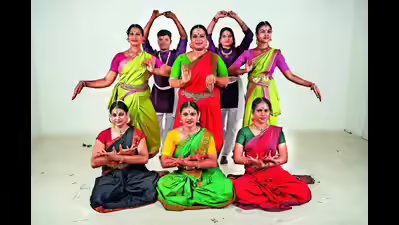
When Omana K was growing up in Thiruvarur, her mornings were filled with the sound of ‘thattu kazhi’ tapping from a neighbour’s home, where a bharatanatyam teacher instructed a dancer, and the sound of ankle bells as the student followed the rhythm. Omana would stand at her doorway listening, dreaming of learning the art form, but the cost of classes and the stigma she faced as a transgender child made it feel out of reach.Omana is today among six trans women who will take the stage for ‘Resilience Rhythms’, a bharatanatyam ensemble performance choreographed by classical dancer Shanmuga Sundaram as part of the ‘Pride Month’ celebrations. The production brings together trans women who have trained under the guru and uses classical dance to explore themes of identity, courage, acceptance and community.“During my transition, I got the opportunity to learn bharatanatyam. I’ve been training for four years now,” says Omana, also a model. “Every time I dance, I feel like I’m fulfilling a childhood dream.”For Rekha V, an HR professional and one of the performers, stepping onto a stage is also an act of resistance. “There is a stereotype that transgender people belong only to begging or sex work, and cannot pursue something like classical dance,” says the 43-year-old. “We were denied many performances because of our gender identity. The stages we have today are because our master believed in us. When audiences watch us perform, many come forward expressing a desire to learn. That gives us hope,” she says. The group has completed seven performances across cities, including Chennai, Bengaluru and Mumbai.The journey, however, is not without physical challenges. Several performers say certain bharatanatyam movements can be difficult after undergoing gender-affirming surgeries. Maintaining positions such as the ‘aramandi’ (the foundational half-sitting posture) requires strength and endurance.The June 19 production will feature ‘alarippu’, a traditional bharatanatyam opening piece built on geometric movements, ‘jatiswaram’, a classical piece on Krishna exploring unconditional love, and another on Goddess Lalitha Tripurasundari that reflects strength.“When I started teaching trans women, there were very few opportunities for them to perform. Today, audiences are more open, and institutions are gradually becoming more accepting,” says Shanmuga Sundaram. “When people see trans women occupying space in classical arts, it encourages others to come forward and learn. Art can create a sense of belonging and community. The more such performances happen, the more young transgender persons will believe that this stage belongs to them too.”‘Resilience Rhythms’ will be performed at Alliance Francaise Madras. Entry is free.