









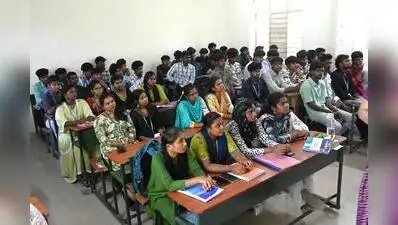
Chennai: Tamil Nadu has retained its top position among the states in gross enrolment ratio (GER) in higher education by enrolling 52.3% of youth aged between 18 and 23 in various degree, diploma and certificate programmes in the institutions, according to Union govt’s latest All India Survey on Higher Education (AISHE) report for 2023-24. The state breached 50% enrolment in higher education for the first time, as the GER improved by 3.2% from the previous year.Experts, however, said a majority of the graduates in the state lack employability skills and urged state govt to focus on improving the quality of degree programmes by filling vacancies, creating better infrastructure and revising the curriculum.“Of 68.4 lakh youth aged 18 to 23 in the state, 35.8 lakh were enrolled in higher education. While 53.1% of girls enrolled in colleges, the number is slightly less among boys with only 51.6% enrolled in degree and diploma programmes,” the report said. The state has 2,983 colleges — an increase of 70 colleges from the previous year — corresponding with an increase in the number of students enrolled in UG courses by one lakh, to 25.4 lakh in 2023-24.“Crossing 50% GER shows that TN has achieved universalisation of higher education. People from smaller cities and rural areas also now have access to colleges in the state,” said P Duraisamy, former vice-chancellor of University of Madras. “But the employability of graduates is low — only around 30%. The curriculum should be updated with a focus on the needs of the industry,” he added.E Balagurusamy, former vice-chancellor of Anna University, asked the state to stop expansion and permitting new private colleges or starting govt colleges. “Opening new colleges won’t help anyone if we are not ensuring quality higher education for students. The quality has been poor for nearly a decade,” he said.“More than 50% of faculty positions across state-run colleges and universities are vacant. Tamil Nadu’s universities and colleges should improve quality by filling vacancies, producing employable graduates, generating better research output and patents,” added Balagurusamy.