








(This article is part of the View From India newsletter curated by The Hindu’s foreign affairs experts. To get the newsletter in your inbox every Monday, subscribe here.)
After Hamas’s October 7, 2023 attack in Israel, in which about 1,200 people were killed, the Jewish nation launched an immediate retaliatory war on Gaza. Its leaders vowed to continue to fight until Hamas was “obliterated”. The war soon spread into Lebanon as Hezbollah fired rockets into Israel-occupied Sheba Farms. In Syria, Israel carried out thousands of air strikes, targeting Syrian troops, Hezbollah positions and Iranian military officers. Hamas was pushed to the southern slice of Gaza. Hezbollah’s leadership, including its charismatic Secretary-General Hassan Nasrallah, was assassinated. In Syria, the Iran-aligned regime of President Bashar al-Assad collapsed in December 2024. Israel appeared to be winning the mini-regional war it was fighting. Many argued that Israeli Prime Minister Benjamin Netanyahu was “reshaping the Middle East” (West Asia) by force.
The tactical gains probably pushed Israel to take bigger risks. In June 2025, it started air strikes on Iran aimed at destroying Iran’s nuclear facilities. The U.S. joined the war to carry out a one-off attack on Iranian facilities and then backed off, claiming that its strikes had “obliterated” Iran’s nuclear facilities. The war ended in a ceasefire on the 12th day. But the conflict was not over.
On February 28, 2026, the U.S. and Israel launched another war on Iran. This time, they had four clear objectives: destroy Iran’s nuclear programme; dismantle Iran’s missile programme; prevent Iran from supporting its non-state allies such as Hamas, Hezbollah, Houthis and Hashad; and bring down regime change in Tehran. Regime change was the central objective as all the other three were linked to it. Six months later, none of these objectives has been met. Not just that. Iran has added a new problem by shutting down the Strait of Hormuz, and cancelled all direct negotiations with the U.S. Israel and the U.S. assassinated Iran’s Supreme Leader Ayatollah Ali Khamenei on February 28, but his son, Ayatollah Mojtaba Khamenei, is now in power. The Islamic Revolutionary Guard Corps (IRGC), Iran’s powerful, ideologically-rooted paramilitary force, has emerged the most powerful branch of the state during the war. The U.S. is now fighting an economic war with Iran to force Tehran to rejoin talks and discuss the opening of the Hormuz Strait, while the nuclear programme, the core issue, has been pushed away from the ambit of prospective diplomacy. While the U.S. is dealing with Iran, Israel is watching anxiously from the margins.
Israel wanted to reshape West Asia by force. Regional order changes when balance of power and the distribution of power change. West Asia has witnessed changes in recent years, but not according to Israel’s plans. The war against Iran remains inconclusive and the Islamic Republic is far from collapsing. The nuclear issue remains unresolved. Hamas has been set back, but not dismantled. Hezbollah is still fighting from southern Lebanon and Beirut. The Houthis did not just survive but emerged as an influential territorial army in Yemen and a naval force in the Red Sea. In Syria, the Assad regime may have gone, but the al-Shaara regime is an ally of Turkey, which is steadily expanding its influence across the region. Project Abraham Accords, which sought to build a common wall of an Arab-Israel alliance against Iran has collapsed. Israel’s bilateral agreements with Arab countries stay intact, but the expansion of Abraham Accords have hit a stonewall. As violence spreads in the West Bank and Gaza remains under occupation, even Abraham Accords countries have started voicing concerns about Israel’s handling of Palestinians.
We picked Israel as the topic for our latest Global Faultlines podcast because we wanted to take a deep dive into these developments. The simple question we asked in the podcast was whether Israel is winning the many wars it is fighting. Conventional wisdom would argue that Israel’s militarism is helping the country stay powerful in a hostile region. But a deeper strategic look offers mixed answers. You may watch our discussion here: Global Faultlines podcast | Is Israel winning?
A Himalayan tragedy

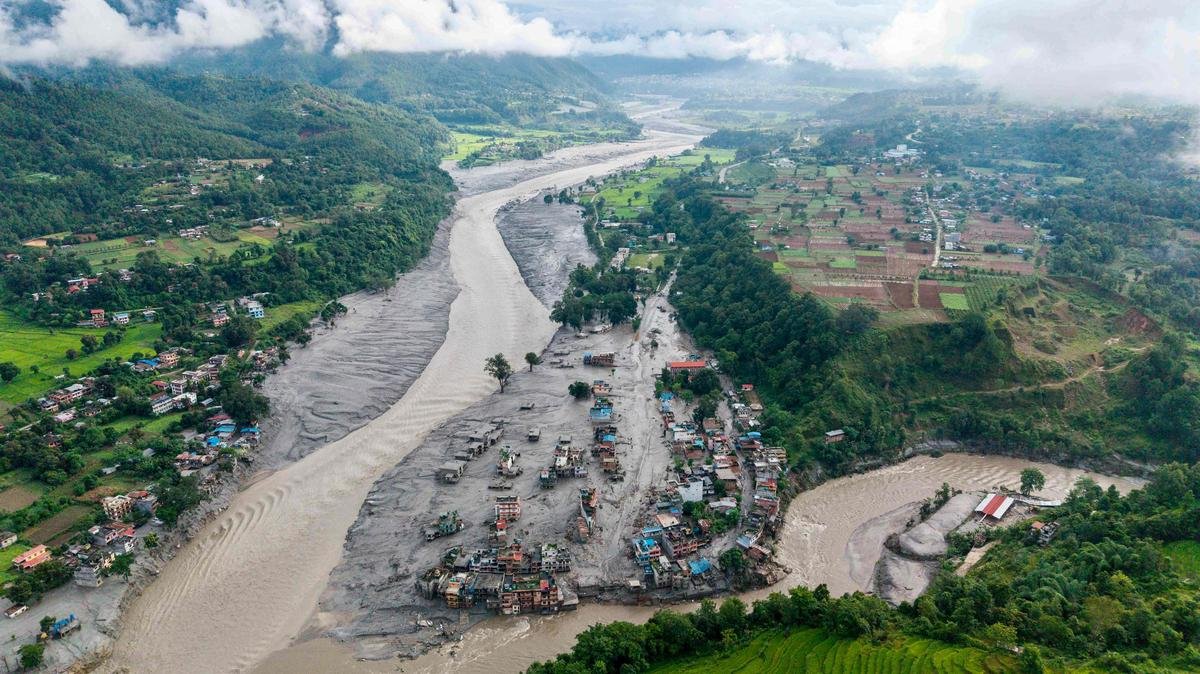
On the morning of August 26, a catastrophic flash flood tore through villages along the Lende Khola, Bhotekoshi and Trishuli rivers in Nepal, likely triggered by a glacier collapse on Langtang Lirung in the Himalayas. The flood wave moved at roughly 193 km/h in its first stretch, giving downstream communities almost no warning; existing early-warning systems were calibrated for monsoon floods, not this kind of glacial event. The flood destroyed the Gyirong/Rasuwagadhi border checkpoint and swept through settlements along a 72-km stretch of the Bhotekoshi-Trishuli River systems, also damaging areas in Tibet.
As of August 31, Nepal had confirmed at least 903 deaths with over 4,000 people still missing, alongside casualties on the Chinese side; some bodies were carried as far as India. Damage includes 32 destroyed bridges and roughly 25 miles of road. Sanjeev Satgainya, The Hindu’s correspondent in Nepal, has been covering the disaster for our readers. To understand what happened in Nepal and its calamitous impact on the Nepalese society, read Sanjeev’s reports, especially this profile we published on August 30: The Bhotekoshi flood | A Himalayan tragedy.
Published – August 31, 2026 05:23 pm IST