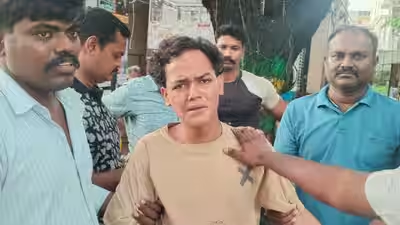



“Does it have a lucky charm? Does it have a hungry person to hunt?” (Teach a hungry person how to fish?) A whole world read the proverb painted on a wall in his boarding school but never understood what it meant. Years later, after getting a college degree and landing a job at an MNC, he works hard to make sense of it. “I had a job and financial security but what about the rest of my community? I wanted to do more for them,” says Sakthivel, who belongs to the Narikuravar community in Uthiramerur, Kancheepuram. He wrote the civil services examination, became a forester and has helped more than 250 people from his community get housing and access to education. He also gives TNPSC guidance to civil service aspirants from the community.Like Sakthivel, several members of the Narikuravar community are breaking free from generations of marginalisation and stigma attached to their traditional hunting-based livelihoods. Today, people from the community are working as doctors, engineers, IT professionals, social activists and teachers. Education, greater awareness of their rights and recognition as a Scheduled Tribe (ST) in 2023 have opened up new opportunities. But even as a new generation seeks to redefine the community’s identity, old prejudices remain.For decades, the community fought for ST status. In 1965, the Lokur Committee, chaired by B N Lokur to review criteria for identifying scheduled castes (SCs) and STs, had recommended that Narikuravars be identified as STs. Until then, they were classified as denotified tribes (the communities in India that the British government had termed ‘criminals’ under the Criminal Tribes Act of 1871). After repeated campaigns by community leaders and tribal rights activists, they finally got their due recognition 58 years later in 2023.Among those at the forefront of the struggle was Karai R Subramanian, president of Tamil Nadu Narikuravar Federation, who has fought for the community’s rights for more than 35 years. “I used to travel across districts selling hair clips and mirrors,” says Subramanian. In 1992, I learned that tribal leaders were organising a demonstration for ST status.
The long fight
- 1871: British government labels them “born criminals” under the Criminal Tribes Act.
- 1952: Provincial Madras government repeals the CTA in 1949. This is followed by the national repeal of the Act in 1952.
- 1965: Lokur Committee recommends ST status.
- 1980: TN Narikuravar Federation organises statewide conference demanding ST status.
- Early 1980s: Chief Minister M G Ramachandran sends petition to Centre for ST status.
- 1989: TN govt lists BC and places Narikuravar under MBC.
- 2013: Chief Minister J Jayalalithaa sends petition; UPA govt introduces bill to grant ST status.
- 2016–2022: Community leaders and activists go on hunger strikes in Delhi.
- Sept 2022: Union cabinet approves proposal to add Narikuravar to ST list.
- Dec 2022: Parliament passes Constitution (ST) Order (2nd Amendment) Bill, 2022.
- Mar 2023: TN govt issues GO to delete Narikuravar from MBC and issue ST community certificates.
Community history
Narikuravars are a nomadic community primarily residing in Tamil Nadu. They continue to face hurdles related to poverty, low literacy, housing access and social marginalisation, despite education initiatives of non-profits and community leaders.
New directions
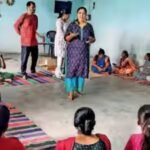
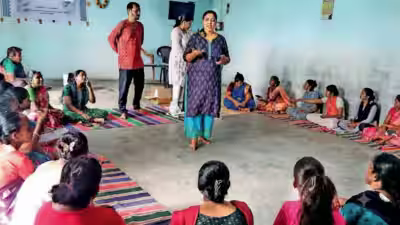
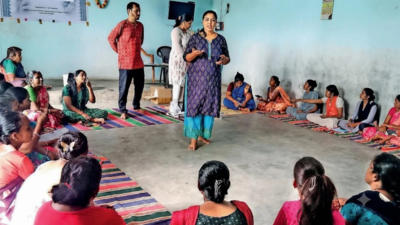
Engineering graduate Suvetha Mahendran, from the Narikuravar community, conducts a workshop on educational and livelihood opportunities available to them.“I joined them,” he says. Subramanian joined protesters who walked 900km from Kanyakumari to Chennai demanding ST status for Narikuravars. He was arrested and detained for five days, and again for 25 days during another protest at the Secretariat. “After we were arrested, we found it difficult to mobilise people,” says Subramanian. “I realised that protests alone would not bring change. The community needed educated people who can speak up and fight for our rights.”In 1996, Subramanian set up a residential school for Narikuravar children and has since helped educate more than 1,000 students.For S Kokila, a third-year MBBS student from Paramakudi, the community’s ST status changed the difference between giving up her dreams of becoming a doctor and pursuing it. “I never imagined I would ever be able to do medicine. My father did everything he could to send me for NEET coaching in 2023. But at the time, we were in the most backward classes (MBC) category, and I couldn’t meet the cut-off,” she says.She and her father had lost all hope in the system, but around the time of the second round of seat allotment, the ST community certificate came through. “That announcement came like a blessing. I became eligible for the ST cut-off,” says Kokila, who has inspired others in her village to take up medicine.But while Narikuravars are breaking barriers, stereotypes continue to follow them. Suvetha, a Tamil Nadu’s first engineering graduate from the community, is working to expand educational and livelihood opportunities through the Narikuravar Education and Welfare Society (NEWS). Through the organisation, she helps students access financial assistance for education and supports livelihood initiatives for community members across villages since 2016.Along with setting up tuck shops for community members, in 2022, the organisation launched ‘Jadi’, an online jewellery brand that features complete works by Narikuravar women. “Handmade jewellery is our speciality, and we decided to build a brand around it. So far, we have 33 women working and even generated a turnover of ₹1.3 crore last year,” she says.Yet, despite her work to expand opportunities for the community, stereotypes persist. She continues to receive phone calls from people asking for snakes, monkeys or rat-hunting services. “I tell them to contact the Great Chennai Corporation, but they say, ‘We’ll give you money. Please come.’ The perception that we are a community of hunters needs to change. We’re trying to break free from a society that has stigmatised us for generations,” she says.
Pull quotes
- “Since our community was granted ST status, I was able to get a seat in medical college.” — S Kokila, MBBS student
- “I coach civil service aspirants from the community because I know what difference education can make.” — Sakthivel A, forester