







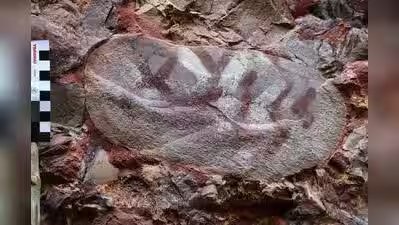
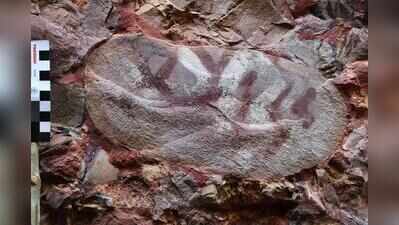
Chennai: Early iron age paintings dating more than 3,000 years old, 14th century inscriptions and a tunnel like cave were discovered recently in the Gudiyam forest area in the adjacent Tiruvallur district.According to the archaeologists, the Gudiyam Caves and their surroundings date from the Palaeolithic to the Microlithic period. Explaining about the new undocumented discoveries at the prehistoric sites, Principal Chief Conservator of Forests (Research and Education), I Anwardeen said the survey team led by Sudhakar Nalliyappan from Yaakkai Trust, Coimbatore recorded raw materials, flakes, partly broken stone-tool cores and anthropogenic polish inside the caves.In the last four months evidence of prehistoric human activity has been documented at 18 of the 40 locations by a survey team. About 90% of the area surrounding the Gudiyam Caves has been covered by the field survey.President of the Trust Sudhakar Nalliyappan said over the past four months the team documented a cave known locally as Vavaal Cave (Bat Cave). The tunnel-like cave is 11.87m long, with an entrance 3.22m high and 2.22m wide. Its levelled and regularly shaped interior suggests it may have been modified by humans, the reports said.“Cupule marks, which are small cup-shaped hollows on rock surfaces, were recorded at five locations around the caves. These include a group of 18 cupules near a spring on the route to Pasumaadu Parai,” he said.The new rock paintings were found at three locations: Kuralchavadu Sunai, Pasumaadu Parai, and Kannithoppu. They include petroglyphs as well as paintings in red ochre, white, and black pigments. “The artwork depicts ancient symbols, geometric motifs, and human figures, and has been assigned to the Early Iron Age,” he added.The most recent find is a historical inscription on a light brown, roughly round stone measuring about 50cm by 50cm. Based on its script, the inscription has been dated to the 14th century CE, making it about 700 years old. It records that a carpenter named Veera Gangathattan excavated a spring at the site.The inscription adds a historical dimension to the Gudiyam forest region, which has so far been known mainly for its prehistoric remains. It shows that the landscape was used by people long after the prehistoric period. Further documentation and investigation are continuing, Anwardeen added.A senior forest official said a report in this regard has been submitted to the state govt.