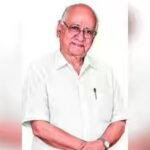







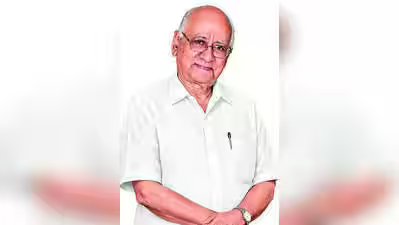
In Tamil cinema, fathers were often cast in familiar moulds. They were either authoritarian patriarchs, helpless men struggling to make ends meet or affectionate elders who existed largely to advance the hero’s story. But Poornam Viswanathan belonged to a rare breed of character actors who could inhabit all these worlds without becoming predictable. He could be a father burdened by financial worries in one film and a delightful comic presence in another. What made him special was that he never allowed his characters to become caricatures.As Tamil cinema marks his 105th birth anniversary (1921-2008) it is worth revisiting how Viswanathan brought dignity, humour and emotional depth to supporting roles at a time when heroes invariably commanded the spotlight.His association with K Balachander was particularly interesting. Both men understood the language of theatre, where timing, dialogue and pauses were as important as expressions. Balachander’s films often revolved around middle-class households, their contradictions, ambitions and insecurities. Viswanathan fitted naturally into this universe.In ‘Varumaiyin Niram Sivappu’ (1980), which explored the frustration of educated unemployed youth, Viswanathan portrayed Needamangalam Sundaram Pillai. The film’s world of economic insecurity and generational conflict offered a sharp contrast to the lighter characters he would subsequently portray. His screen presence carried the anxieties of an older generation caught between conventional expectations and changing realities.‘Thillu Mullu’ followed the next year, where Balachander tapped into his comic potential. Playing a doctor and family friend in Rajinikanth’s comedy of deception, Viswanathan demonstrated that humour did not always require exaggerated body language. His straight-faced reactions, controlled expressions and impeccable timing complemented the film’s increasingly absurd situations.Balachander’s daughter Pushpa Kandaswamy remembers how Viswanathan was part of several of her father’s landmark films, beginning with ‘Sollathaan Ninaikkiren’ in 1973. “My father often scouted for artistes from the world of theatre. Viswanathan was one of the people he handpicked. Though my father largely explored his comic potential, he also experimented with the actor’s versatility like in ‘Pudhu Pudhu Arthangal’ (1989), where he played a man from Goa. There were several layers to his performance, with nuances that conveyed deeper meanings.”There was something distinctly appealing about his comic performances, adds Pushpa. “He could look serious even when the audience was laughing at the predicament unfolding around him. That ability to stay in character while allowing humour to emerge from the situation was one of his greatest strengths,” she says.Actor and theatre veteran Y Gee Mahendra says his father (Y G Parthasarathy) and Viswanathan were colleagues at All India Radio in Delhi and shared a close friendship. “Though they lost touch for a while, they reconnected around 1964,” says Mahendra. “Viswanathan had translated the Hindi play ‘Under Secretary’ into Tamil, which my father’s theatre troupe staged. The play featured a young Jayalalithaa opposite Cho Ramaswamy, while my father was paired with Jayalalithaa’s mother, Sandhya.”Mahendra adds that Viswanathan’s association with writer Sujatha marked a “glorious chapter” in his theatrical journey. “He would breathe life into Sujatha’s characters. For instance, his portrayal of a foreign-educated doctor frustrated by the Indian system in ‘Dr Narendranin Vinodha Vazhakku’ remains a fine example of his histrionic abilities. Though audiences remember him for his emotionally intense portrayals, comedy was his forte,” says Mahendra who acted with him in ‘Dikkatra Parvathi’ (1974), Singeetam Srinivasa Rao’s debut directorial venture in Tamil.Viswanathan never seemed particularly concerned about the size of his roles. Even when playing a character who appeared briefly, he gave audiences enough to remember. In an industry where supporting artists were often reduced to familiar stereotypes, he lent individuality to the most conventional parts.Perhaps that is why his performances continue to resonate.‘Carried warmth and grace off the screen’To me, he was no different from the character he portrayed in ‘Varusham 16’ — a dignified, affectionate and commanding head of the family. He carried that same warmth and grace off the screen. He was truly a father figure, someone who commanded respect without ever having to demand it: Khushbu Sundar, Actor, politician‘Understated brilliance spoke volumes’The beauty of Poornam Viswanathan’s performances lay in their sheer naturalness. In Moondram Pirai (1982), director Balu Mahendra could do complete justice to Silk Smitha’s character because Viswanathan brought authenticity and emotional depth to his role as the boss. He proved that powerful acting need not be loud or dramatic. His understated brilliance spoke volumes: Chithralakshmanan, Executive committee member of Tamil film Producers’ CouncilStandout rolesFilms such as ‘Payanangal Mudivathillai’, ‘Vidhi’, ‘Keladi Kanmani’ and ‘Aasai’ demonstrated his ability to adapt to different family narratives. In ‘Aan Paavam’, he comfortably entered Pandiarajan’s world of rural humour, proving that his comic appeal was not restricted to Balachander’s urban settingsIn Kamal Haasan’s ‘Mahanadhi’ (1994), Viswanathan’s role as Panjapakesan Iyer, a fellow prisoner who becomes a source of companionship, added warmth to an otherwise disturbing narrative. The performance was a reminder that an actor did not need to dominate the screen to leave an emotional imprintIn the Malayalam movie ‘Chithram’ (1988), he played Ramachandra Menon, the father of Ranjini’s character. The filmwas a huge hit and Viswanathan became a familiar face in KeralaIn ‘Thillu Mullu’, he plays the doctor who connects Chandran (Rajinikanth) to his job, sets the storyHis best-known Hindi film is ‘Ek Duuje Ke Liye’ (1981), directed by K Balachander, where he plays Kamal Haasan’s father, who opposes his romance with a Hindi-speaking girl