







The khukuri knife is an iconic symbol of the Gorkha military, originally from Nepal, and is closely associated with the Gorkha soldier, symbolising strength, courage, bravery and loyalty.
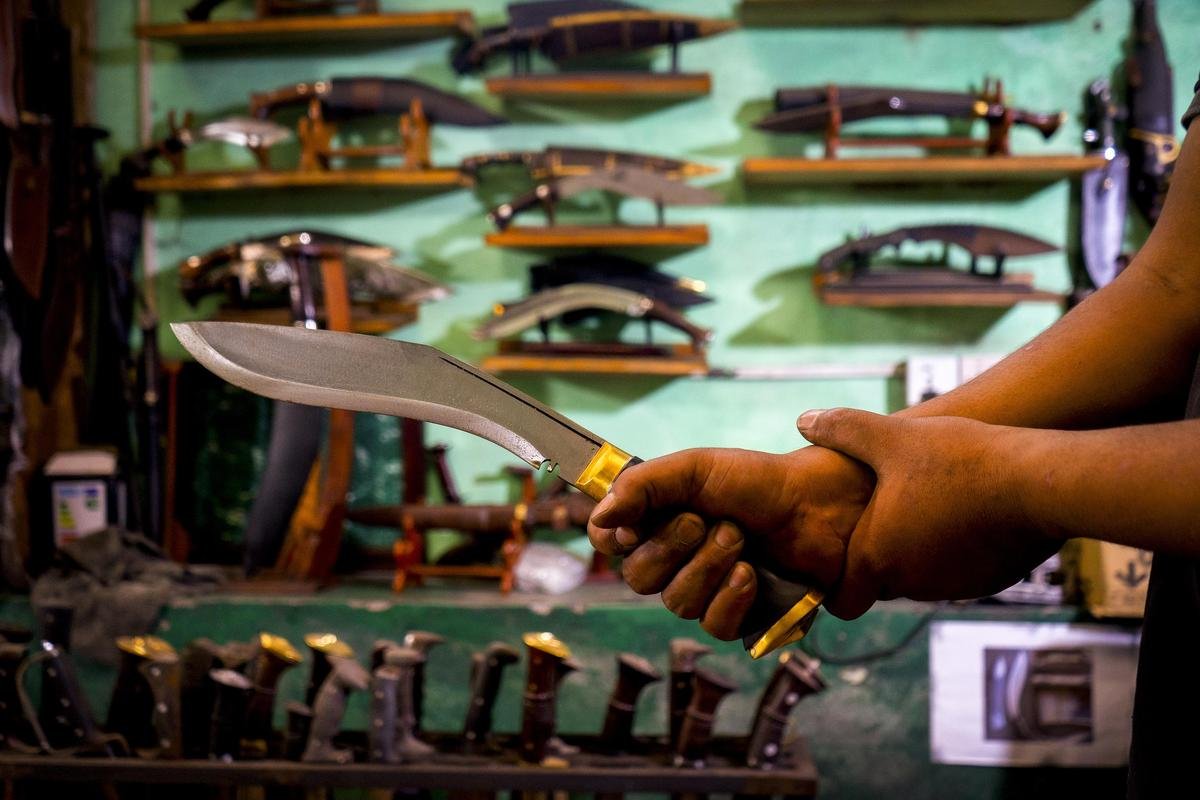
A typical khukuri blade has a distinctive curved shape, and a hard blade, measuring 16 to 18 inches, can be used as both a weapon during combat and a tool in Nepal. Khukuris are forged from spring steel with a notch at the end of the blade, designed so that blood and sap drip off the knife instead of seeping onto the hardwood handle.
According to the Nepal Army, after 1744, the khukuri worn by the Gorkha soldiers who fought under the leadership of Prithvi Narayan Shah, who was the king of the Gorkha kingdom, in the Nepal Unification Campaign, made a significant contribution to the creation of modern Nepal.
When Britain initially encountered Gorkhas in the mountains of Nepal in 1814, the Gorkhas fought so fiercely and admirably with their khukuris. After that, the khukuri became the symbol of courage, bravery, and warfare skills of the Gorkha soldier, and they were recruited into the British Army. Now, the Indian Army currently fields seven active Gorkha Rifles regiments and the British Army has one primary Gorkha infantry regiment, The Royal Gorkha Rifles (RGR).
The Nepal Army uses the khukuri as a combat weapon, a survival tool in field operations, and an important part of military training. It is also carried during parades and ceremonial events, cultural events, symbolising the courage, tradition, and identity of Nepali soldiers.
Though the khukuri is best known as a ruthless combat weapon, the knife has several other uses. Gorkhas can use their khukuris to chop or carve wood, cut meat and vegetables, dig, and hunt wild animals.
The act of sharpening a khukuri is a ritualistic process, symbolising the soldier’s commitment to duty and honour. People of Nepal worship the khukuri during various festivals.
Although the khukuri has undergone some changes in its appearance from ancient times to the modern era, its importance, respect, and identity have not diminished.

Photo:
Prabhat Khanal
A man demonstrating the proper handling of a handcrafted Khukuri knife in a factory, showcasing its precision, balance, and readiness for action.

Photo:
Prabhat Khanal
Final touches: The knife is sharpened on a machine during the finishing process in a traditional workshop.

Photo:
Prabhat Khanal
Precise detailing: A blacksmith shapes a red-hot khukuri blade with a hammer during the traditional forging process at a workshop.

Photo:
Prabhat Khanal
A craftsman heating a khukuri blade in a coal-fired furnace before shaping it by hand at a traditional workshop in Patan, Nepal. Handmade khukuris are made using skills passed down through generations.

Photo:
Prabhat Khanal
Mark of pride: Nepali Army personnel place their khukuris against their chests as a mark of respect before beginning a drill. The khukuri continues to play an important part in military training.

Photo:
Prabhat Khanal
Fierce loyalty: Personnel of the Nepal Army performing a synchronised khukuri drill during a military display in Kathmandu, Nepal. The blade is showcased by soldiers during parades, ceremonial events and cultural events as symbol of loyalty and courage of the soldiers.

Photo:
Prabhat Khanal
Warriors in rhythm: A drill that forms part of a military display, showcasing precision, discipline, and the traditional combat weapon.

Photo:
Prabhat Khanal
Secure build: A worker at a workshop in Patan handcrafting a khukuri sheath. This sheath is worn around the waist by soldiers to carry the blade securely and draw it with ease.

Photo:
Prabhat Khanal
Razor sharp: A worker shapes and sharpens the khukuri on a machine during the finishing process.

Photo:
Prabhat Khanal
Combat ready: Personnel of the Nepal Army seen with bayonets on their rifles which are not the same as the khukuri.
Published – June 28, 2026 10:32 am IST