






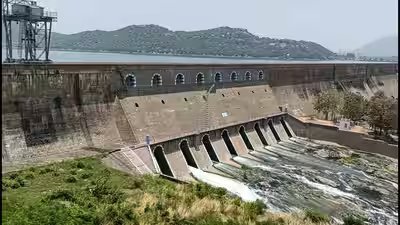
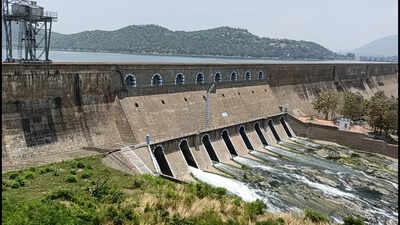
SALEM: Water resources department officials on Thursday night stopped release of water from the Mettur dam for instigation after the reservoir level fell below 60 feet, raising concerns over samba cultivation in the Cauvery delta districts. The water level stood at 59.13 feet on Thursday morning, with storage of 24.04 tmcft. Inflow into the reservoir dropped from about 900 cusecs to 696 cusecs, while storage declined sharply over the past two weeks.The reservoir has fallen below 60 feet for the first time in more than three years, having last touched that level in August 2023. Officials attributed the decline to inadequate southwest monsoon rainfall in Karnataka and Kerala, lower inflows and the absence of surplus releases from Karnataka reservoirs while water continued to be drawn for irrigation.Mettur dam is traditionally opened on June 12 for irrigation in Cauvery delta districts — Thanjavur, Tiruvarur, Nagapattinam, Mayiladuthurai, Tiruchy and Ariyalur. Poor storage prevented release of the water on the customary date this year. Rainfall in Karnataka catchment areas and inflows from upstream reservoirs subsequently pushed the water level above 90 feet, enabling the govt to release water on Sept. 1. Authorities then announced that supplies would continue for 45 days. At the end of 45 days, officials downed the shutters of the dam.Delta farmers, who started samba cultivation, alleged that adequate water had not reached several tail-end areas. With irrigation releases halted and reservoir levels continuing to decline, farmers are anxiously awaiting good rainfall in the northeast monsoon season to save their samba crops.Agriculture department sources said the coming weeks would be crucial for samba cultivation as the crops in many parts of the delta are at the vegetative growth stage and would require either timely rainfall or supplementary irrigation for healthy development.Expressing concern over the situation, Cauvery V Dhanapalan, president of the Federation of All Farmers Associations, Nagapattinam district, said farmers were now entirely dependent on the northeast monsoon. “Nearly five lakh acres of samba crops in Tiruvarur and Nagapattinam districts could go dry if there is no further Cauvery water release and the northeast monsoon fails. If standing crops suffer damage, state govt should provide 100% compensation under the crop insurance scheme. We expect such an announcement from the govt,” he said.S Vimal Nathan, secretary of the Tamil Nadu Cauvery Uzavargal Pathugappu Sangam, Swamimalai, Thanjavur district said, farmers would face severe financial hardships if rains failed. “There will be unexpected financial losses for farmers if the northeast monsoon does not support us. We expect only nature to save our crops now,” he said.Vimal Nathan urged the state and central govts to declare Tamil Nadu a drought-hit state if rainfall remained deficient. He called upon the state govt to initiate steps to secure assistance from the Centre under disaster relief provisions so that adequate compensation could be provided to affected farmers.Officials expressed concern over drinking water availability next summer. Mettur supplies drinking water to several districts, and around 9.60 tmcft has been earmarked for drinking water requirements and sustaining the reservoir ecosystem.Submerged Nandi idol reappearsThe receding water of the Mettur dam has once again exposed parts of the Jalakandeswarar temple at Pannavadi. With the reservoir level dropping below 60 feet, the Nandi idol and its pedestal have become visible.The Jalakandeswarar temple, along with several structures including the twin church towers at Sethukuzhi, were submerged when people in the reservoir area were relocated during the construction of the Mettur dam. The church towers began emerging above the water surface last month as water levels receded.The reappearance of these submerged landmarks has started attracting tourists and devotees to the Pannavadi coracle point. Locals expect visitor numbers to increase in the coming days if reservoir levels continue to fall, exposing more portions of the ancient structures.