








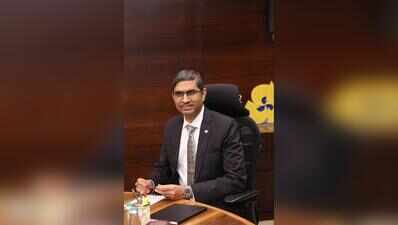
Chennai: Public sector lender Indian Bank is aiming to raise $2 billion through Foreign Currency Non-Resident (Bank) [FCNR(B)] deposits. The move comes in the wake of the RBI withdrawing the interest rate ceiling on fresh FCNR(B) deposits with maturities of three to five years until Septr 30, 2026. The bank has seen a spurt in FCNR(B) deposits over the past 25 days following the RBI’s move.“So far, we have secured $140 million between June 15 and July 9. We plan to raise around $2 billion by Sept this year. We already have a pipeline of $1 billion,” Indian Bank MD & CEO Binod Kumar said here on Friday. The inflow target is more than four times the bank’s FCNR(B) deposit mobilisation in FY26, when it raised $457 million. The bank has revised the interest rate on FCNR(B) deposits to 6% from 5.5%. Noting that the proposed $2 billion mobilisation through FCNR(B) deposits would be among the highest for the bank under the scheme, he said the annualised return would be around 13%-14%.Meanwhile, Indian Bank posted a 10% rise in net profit to Rs 3,273 crore in Q1 of this fiscal from Rs 2,973 crore in the year-ago period, driven by an increase in yield on advances and strong growth in net interest income (NII), among others.NII rose 17% to Rs 7,435 crore from Rs 6,359 crore. Domestic net interest margin (NIM) improved to 3.41% from 3.35%, while the domestic CASA ratio increased to 39.73% from 38.97%. The bank is financing two mega data centre projects, each being developed with an investment of Rs 4,000 crore, including one in Hyderabad.Kumar said the conversion of 17 lakh inoperative accounts increased savings balances of Rs 1,469 crore. Moreover, the reactivation of inactive accounts helped add another Rs 2,000 crore in balances. “The inoperative accounts ranged from two years to 10 years. We developed a prediction model and commenced this process in the last quarter (Q4 FY26). We used our call centre, sent SMSes, and for some accounts, we even deployed manpower to understand why the accounts remained inoperative. The strategy worked,” he added.