







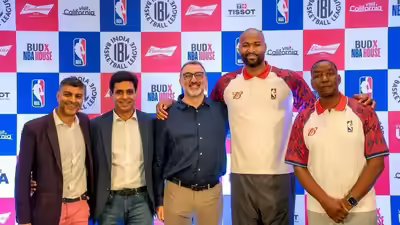
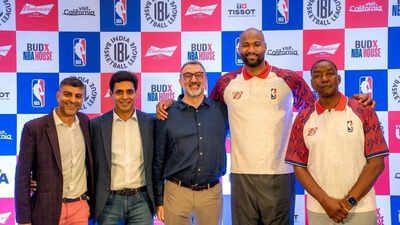
New Delhi: NBA‘s ambitions in India extend well beyond television ratings and live game broadcasts. During the BUDX NBA House weekend in New Delhi on May 9-10, Sunny Malik (NBA India’s Country Head) and Rajah Chaudhry (NBA’s Head of Strategy for the Asia-Pacific) outlined the league’s long-term vision for one of its most important international markets. From expanding the BUDX NBA House experience to new cities and building basketball culture through fashion, music and community engagement, to tackling challenges posed by time zones and evolving fan consumption habits, the executives discussed how the NBA is approaching growth in India differently from other regions. They also reflected on the importance of digital platforms, social media, grassroots participation and partnerships in creating a sustainable basketball ecosystem. In this conversation, Malik and Chaudhry explain why India remains a strategic priority for the NBA and how the league plans to deepen its footprint across the country in the years ahead. Q. What was the objective behind building the BUDX NBA House? It has gone from Mumbai to Delhi now. Which cities have been in consideration?Sunny Malik: When we started this IP (intellectual property), it was to build an IP that we can take around the country. We can take it across cities and try and ensure that everyone, all the fans in different cities should be able to touch and feel what NBA stands for. So that was the primary objective, but the plan got changed a couple of times.We kept on identifying which are the best cities, but Delhi turns out to be a natural first or second choice for us, and that’s why we are here.
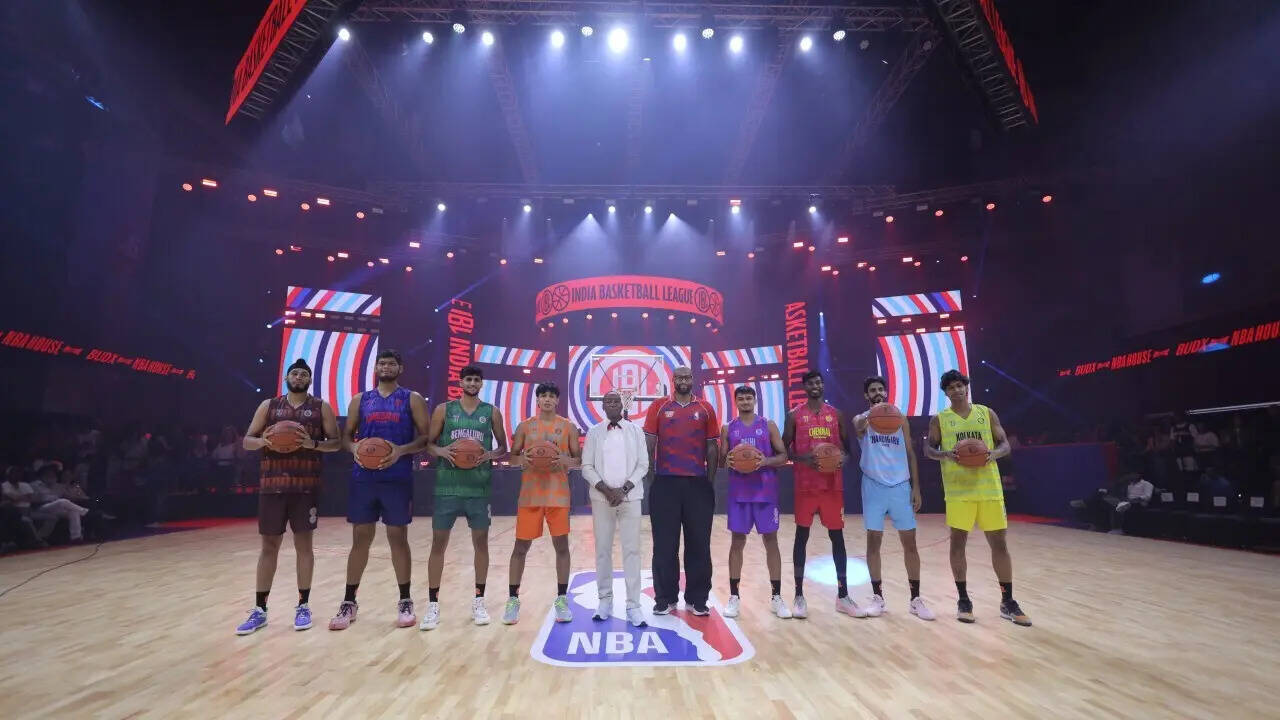
Players during the BUDX NBA House in New Delhi, India.
Q. Was Bangalore a consideration? Because it has a huge young population and basketball is quite popular there. Not to forget there’s plenty of US companies with base in Bengaluru. Why did Bengaluru not make it? Rajah Chaudhry: We have next year, we’re already starting to think about (it). So Bengaluru is on our list. For us, it was just about picking one and going with it to some extent. It’s not necessarily one above the other, it’s just picking a spot, giving ourselves enough time to execute, there’s a lot of effort that the team puts into putting these on, so it’s more picking the spot and then running with it. Obviously they’re the three big cities in India that we want to get to, so we’ll definitely get to Bengaluru, I think soon enough, in fact we’re already thinking about it for next year.Q. Can BUDX NBA House happen more than once a year? What is the window for such an idea?Rajah: We’re evaluating it now as we speak. It’s dependent on a few things. One is finding the right cities and continuing to work with our partners to identify where they’re interested in targeting their audiences as well. The other one is timing. Last year and this year we’ve done NBA House around the playoff, we’re trying to think about are there other windows when we can celebrate everything that’s happening in the game. Still whilst NBA House or BUDX NBA House is trying to celebrate all the things that sit around the game, we don’t want to lose sight of the game itself. So we need to find the right windows within the season, so we’re still evaluating all those things, whether we can do it next year or the year after, we don’t know yet, but we’d love to get to doing multiple NBA Houses across the country, we just need to work out the timelines. Q. Can one market and its learnings be replicated to another? Example, can learnings of Brazil, Australia etc. be applied to a country like India when it comes to growing the sport? Rajah: I would say India is unique and there are certain headwinds and certain tailwinds. In terms of the headwinds, time zone has always been a bit of a challenge for us with the timing of games in India. But we’re trying to really create a culture around the games that encourages a breakfast, morning kind of approach.The one good thing sometimes in having a different time zone is we don’t have a lot of clutter with other sports. So if you can identify a fan that builds it into their day, then the nice thing in certain markets and certain regions that we have is once you’ve established a habit, then the good thing is we’re not competing with other sports, we’re not necessarily in prime time either. So there’s sort of pros and cons sometimes to time zone.Other things, and I think BUDX NBA House is a great example of some of the tailwinds where we can really lean on some of the positives in the Indian market where the NBA brand resonates so nicely around culture and lifestyle in a way that maybe in other markets, because the game itself is the centre of everything, it doesn’t work as well.
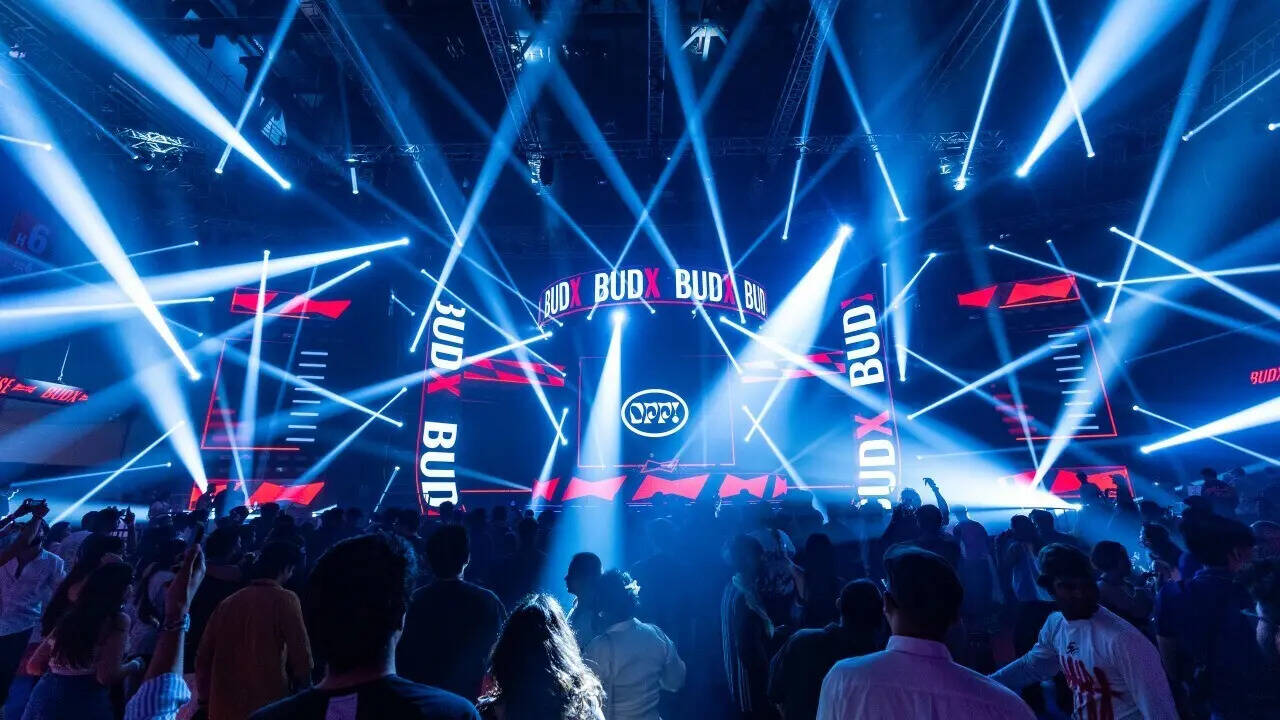
Crowd at the BUDX NBA House in New Delhi, India. (Instagram)
But in India, all the lifestyle, cultural, community elements that sit around basketball actually is a really nice way to bring everything together. And obviously we identified that opportunity a few years ago when we established the NBA Style platform and really BUDX NBA House is more of an expansion on that to bring something on ground, to bring that celebration of all the things around basketball on ground.So in that sense, we really like the Indian market. It allows us to experiment with different things. Actually, last year in Mumbai was the first NBA House we had done in the Asia-Pacific region.And this year we followed it up with an NBA House in Japan a few weeks ago, an NBA House in Australia that is happening next week. So actually other parts of the region have seen what we could do in India. And each region and each country is establishing its own kind of culture around the NBA House.And that’s the beauty of the NBA House platform. Whilst the NBA game itself is quite consistent, the way you watch it and the way you see it, it’s very consistent across every game, across the whole season. NBA House kind of leans into where you can develop certain nuances. You can bring local celebrities who add a local flavour. You can work with local partners who can help develop the local angles. So all those sort of things, I think there’s, like I said, headwinds and tailwinds.
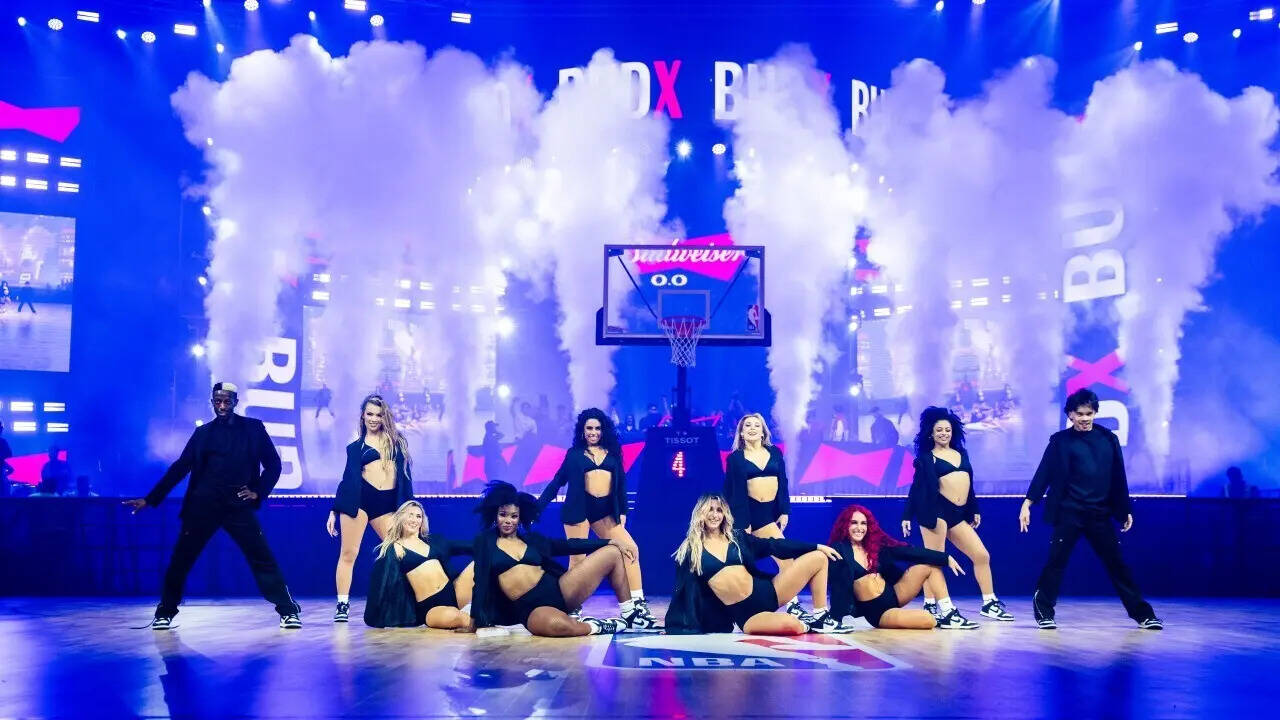
Dance crew of the Sacramento Kings during the BUDX NBA House in New Delhi, India.
Q. Are there elements in the Indian market that are still untapped? Plenty of leagues, including American ones, have entered India in the past decade or more. Are there any learnings to take from other sports, other leagues, other properties? Sunny: I can only say that India is a large opportunity, and we understand that pretty well. And that’s why we are amongst the oldest leagues to have a have an office in India, full time staff in India. We’ve been in the country for 14 years now. We were amongst the first ones to have a full operational setup in the country. So we understand the importance of the country.We understand the potential it carries. Young demographics, such a large sporting culture, which is evolving with the growth of the GDP and the per capita (income), which is getting into the discretionary zone now. You know, you’re taking care of the basics now.You’re getting into a zone wherein spending on discretionary spend, spending on entertainment, spending on sport is becoming a part of life for everyone, even for middle class. So you’re seeing that growth happening. You’re seeing the overall economy evolving, and that is where probably magic happened in so many countries that we see outside of India. And that is where we feel that India is at the cusp of that change, which is coming in the sporting culture as well. So that’s a big opportunity.
We have been in the country for 14 years now. We were amongst the first ones to have a full operational setup in the country. So we understand the importance of the country
Sunny Malik (Country Head, NBA India)
As far as other leagues are concerned, I think everyone has their own strategy of investing in the country. Some were operating from out of the country for quite some time, and they just started their offices in India.Some were having some skeleton structure with a couple of people operating and majorly focused on the broadcast business. But ours was always a very holistic structure. We were always focused not only on the media business or the marketing side of it.We were doing everything end to end, starting from grassroots to marketing to lifestyle aspect of it, as Rajah highlighted. We were the first ones in India to sort of, in NBA ecosystem, to start our NBA style platform and followed it up with a style element because we feel that’s something which people can resonate with in the country. So a lot of opportunities for us.We are running in our own unique way of building the game in the country. Everyone else is running their own way. And I think all of us are sharing the best practises with each other.
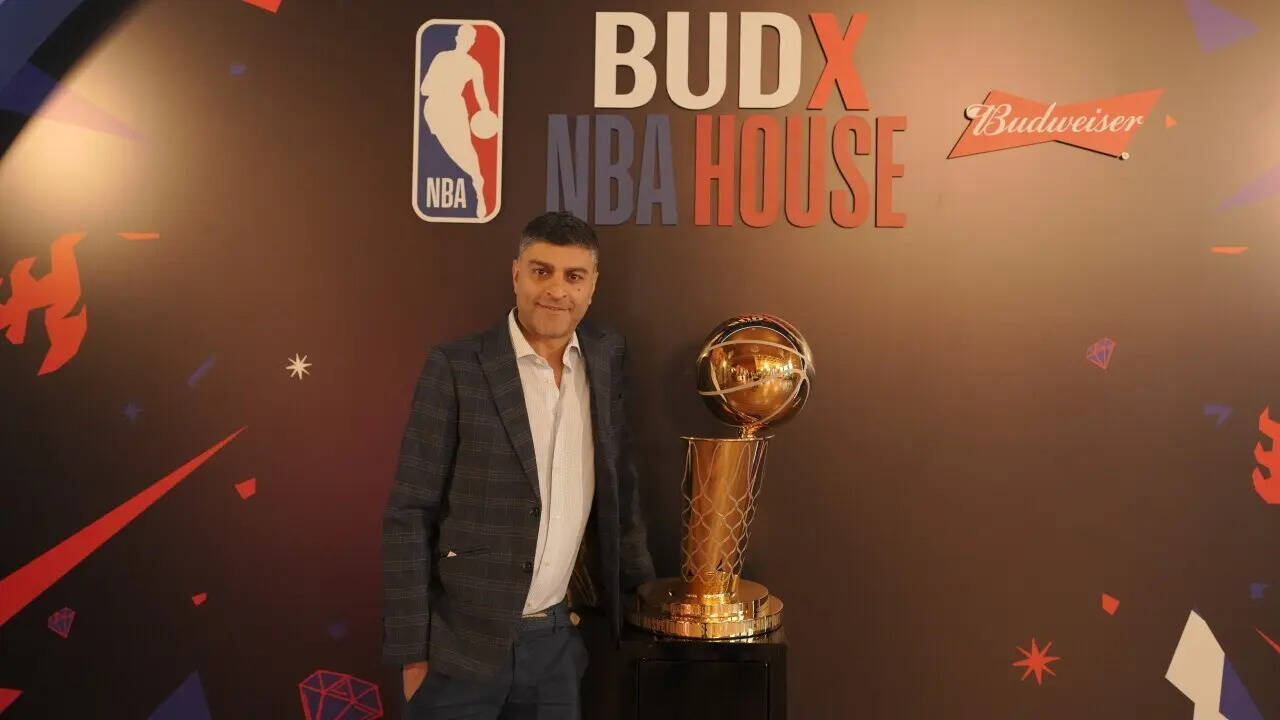
Rajah Chaudhry, Head of Strategy, Asia Pacific- NBA.
Q. As the 2026 FIFA World Cup as witnessed, time zone is a real issue in not just finding a broadcaster but also in getting brands interested. Is that a challenge that you face even right now in getting brands to collaborate, in getting people to watch a game?Rajah: Look, it’s an evolving journey. I’m not going to say that we know the exact solution to go from what is an interesting sized audience today, I would say, to a massive audience, which is what our ambitions are obviously quite big. But like Sunny said, we’re doing lots of things which we know that at some point there will be a tipping point. And you can’t do things in isolation.You can’t just focus on broadcast and say, ‘please watch my game.’ You have to do other things around the sport. And so we’ve got a lot of things happening in and around the game, like Sunny said, a very holistic strategy and a very holistic approach, which we feel will ultimately lead back to live game viewership.But fundamentally, we also can’t necessarily change the time. There are, thankfully, over the years, times of our games have kind of spread out a little bit more. There are opportunities now where certain games are played a little bit later or a little bit earlier or these sort of time shifts that happen, which is great.But again, I think for us, it’s about building consistency and habit with fans. When you think about all good sports that break through that tipping point of having sort of a smaller audience to having a massive mainstream audience, it’s that creating of habit. And so again, we’re really focused on creating that habit and delivering the game in different ways.Again, whilst you say live games is critical and we know that all around the world… In India, we have to be a little bit more creative. We do have to accept that some of our fans are more interested in watching highlights. So making sure that we have a great highlights package that they can watch.So brands still can participate when you talk about highlights or things that you’re doing around the game. And I think it’s about having a holistic partnership. And ultimately, what brands love about the NBA is our brand.It’s the association with our brand. It’s a very powerful brand. It’s something we protect with everything we’ve got.And we’re very selective about who we partner with and how we partner with them. And so we protect that at all costs. And so we’re not in a rush.We know that there’s still a journey that we need to go through. We’ve already been on this journey for many years and we are continuing to sort of stay true to that journey. Because again, we see the massive potential, but we don’t expect it to happen overnight.
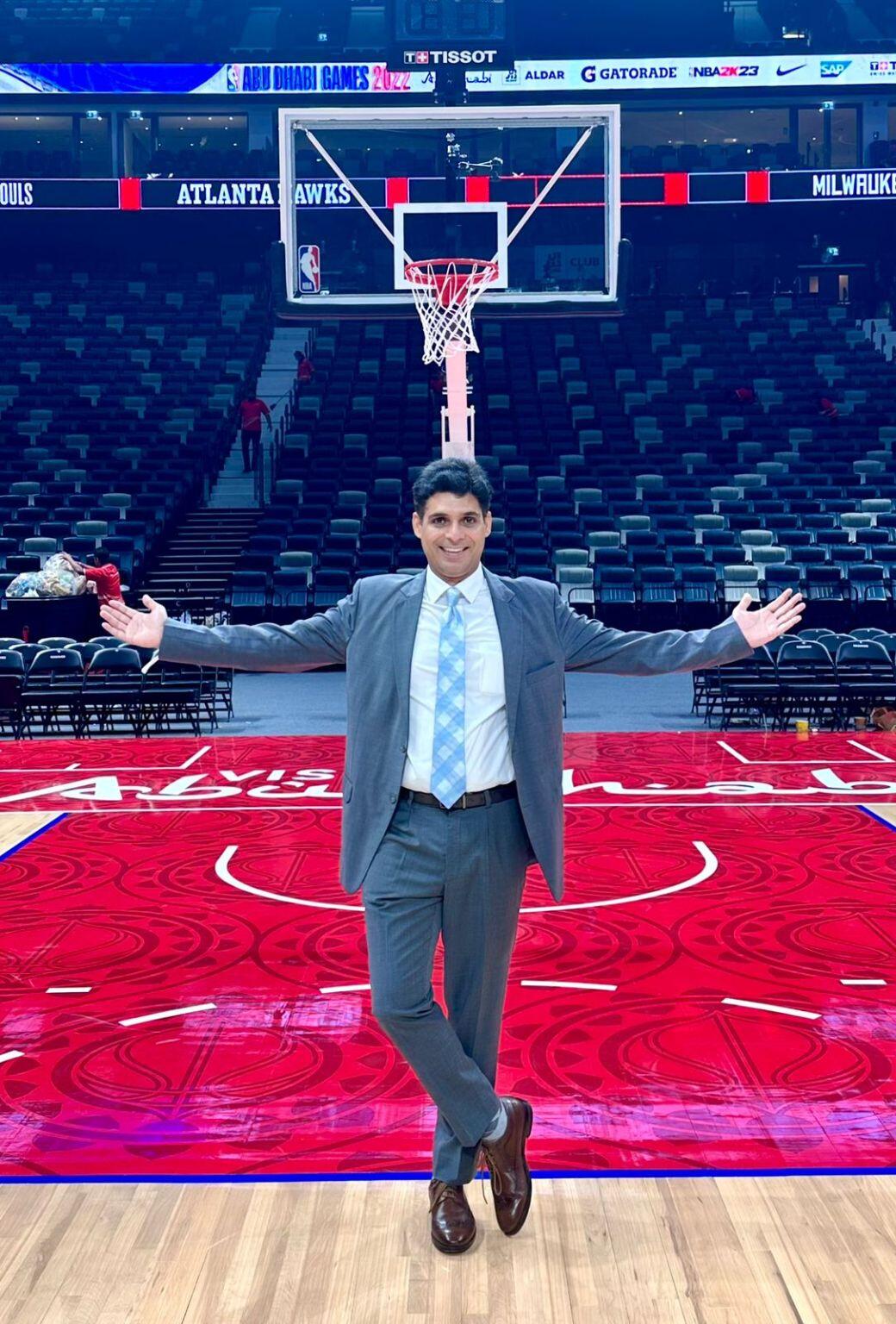
Sunny Malik – Country Head, NBA India.
Sunny: As Rajah said, it’s not that we are not trying unique things. As he said, we’ve been doing a lot of creative stuff in the country. We were a partner with Sony for 10 years.Post that, we worked with multiple different broadcasters, tried creative ways of trying to tap into the culture which is being fed in the country. We partnered with MTV. Our games were live on MTV as well.Because we felt that lifestyle element also pretty much resonates with what MTV does and we do. When Jio came into play. And then getting on to YouTube, we became the only league to have 100 games live on YouTube, which was done last year to tap into that massive potential that YouTube has in the country.Outside of YouTube, Amazon Prime Video, Disney Hotstar, Jio, we also partnered with Prasar Bharti in order to get those eyeballs, getting into a much larger domain, getting into the DD free zone of some 45-50 million household. Because we don’t want the games to be restricted to just a very niche paying audience. We want our game to go to a much larger audience base.We want people to see what NBA stands for, what the best basketball in the world means. So we had that three-year partnership with Prasar Bharti, which was again a very creative way for any global league to partner with a national broadcaster. And then those non-live games for two hours every day over three years.And we got a lot of that spillover audiences from that non-live onto live platforms and you can see that impact happening. So the objective is not to get cocooned into just one way of saying that live games are the way to be. We want to try different ways because people like to consume games in different ways in the country. That’s our objective.
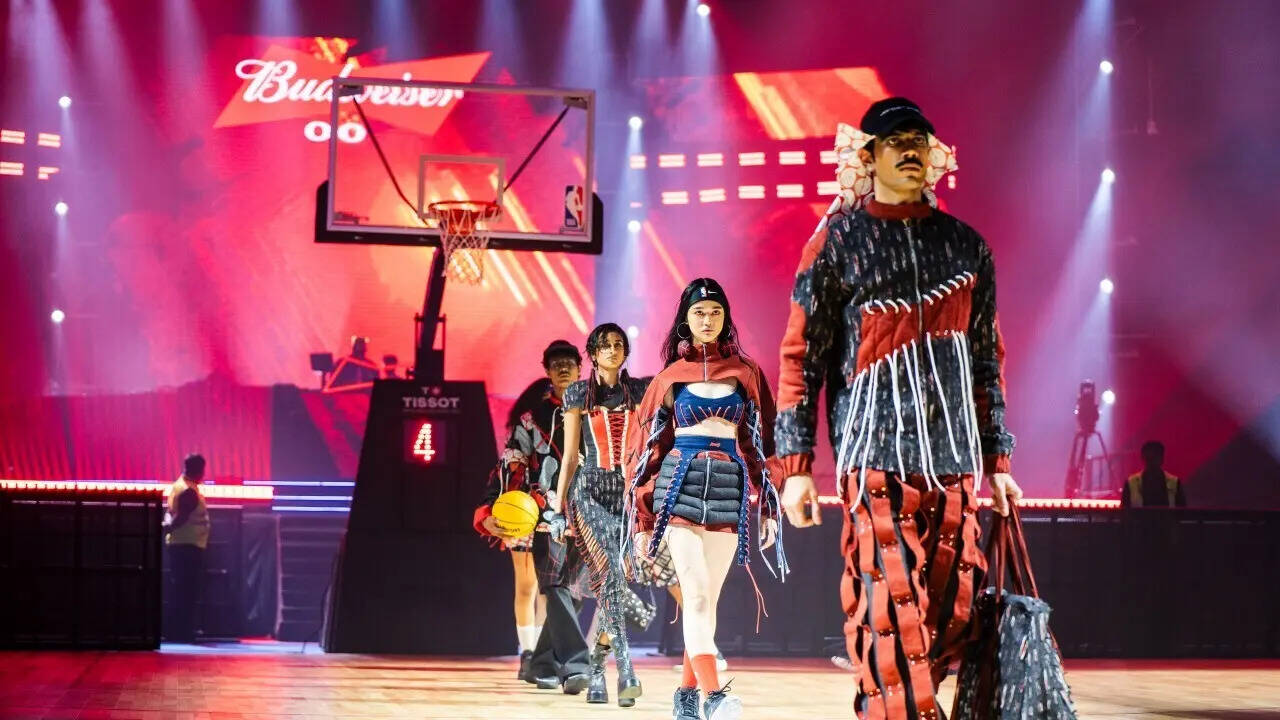
Fashion show during the BUDX NBA House in New Delhi, India.
Q. NBA on its social media produces and shares a lot of content. There are immediate clips from games, there are highlights and importantly, there are no geo-blocks. That is something that not a lot of other leagues are doing. What is the challenge there and how is NBA working around it?Sunny: If (a) broadcaster is showing (a) live game and we are showing some highlights across various platforms, we are creating those clips across various platforms. That’s only fuelling the demand for the product, getting onto the live broadcast ecosystem.That’s what we tried doing with our non-live stint with Prasad Bharti. That’s what we tried doing with a lot of stuff that we are doing with YouTube now. And that’s the aim.The aim is to grow the game in the country. The aim is to use social media as a powerful tool to try and test for people and test what NBA stands for and create that demand for the product.
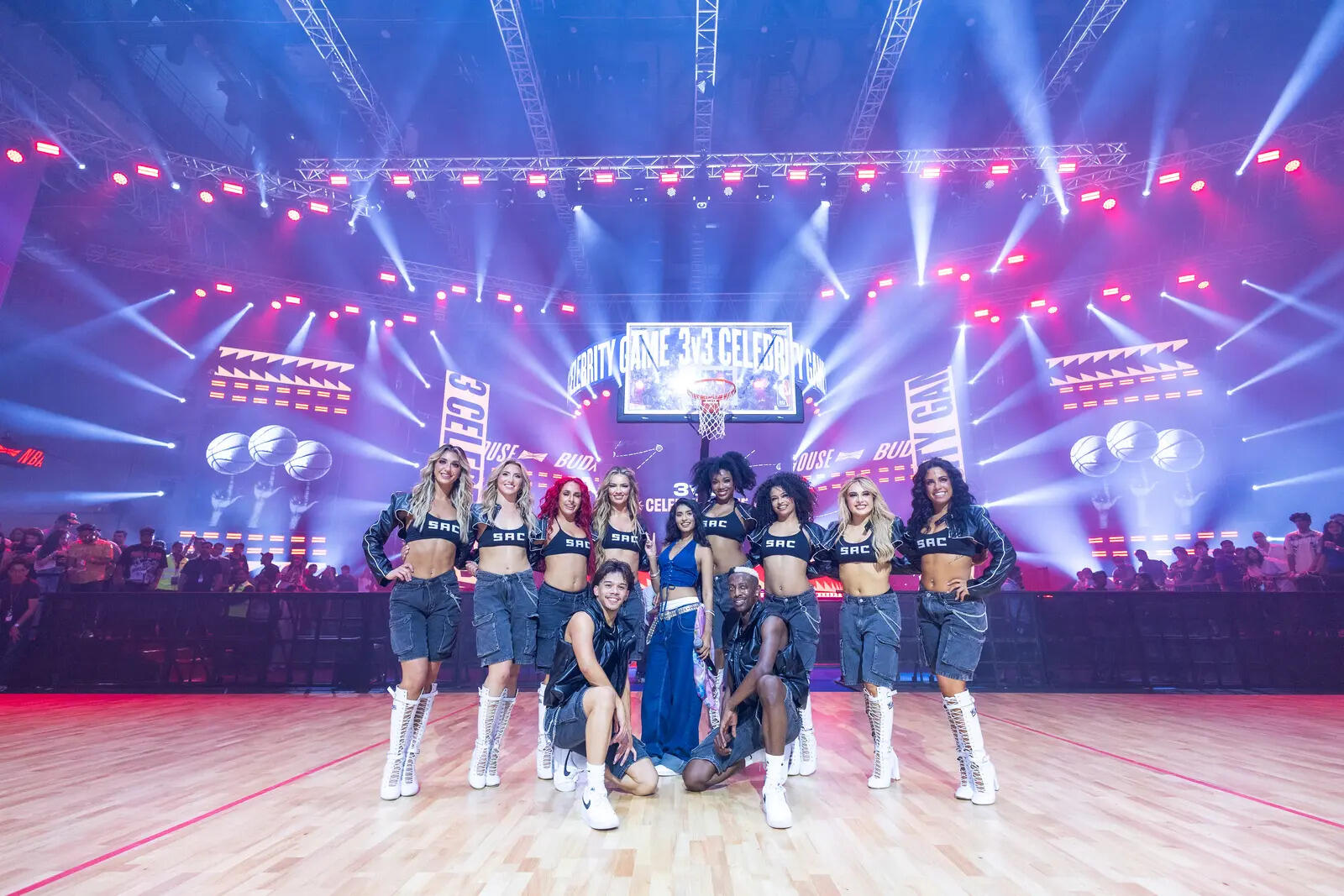
Sacramento Kings crew during the BUDX NBA House in New Delhi, India.
Q. NBA League Pass has been around for a long time and has changed the way the sport is consumed internationally. Other sports and leagues have not introduced something similar. How important is it to growing the sport?Rajah: It’s a fine balance. We think it’s important to have our own operating platform.We do have to strike a balance between our local broadcast partners because ultimately it is a fine balance making sure that what we’re not doing is necessarily cannibalising what they’re trying to do. And I think we found that balance in many regions and hence why we continue to think it’s a great strategy to have both because what we find is your slightly more hardcore fans end up with League Pass subscriptions. They want to watch many games through the season. There’s a certain comfort that I think they have in watching and interacting with an owned and operated platform and having the freedom to watch every game. Whereas you have many other fans who are maybe more casual or still hardcore but watch in a different way. And so often they will maybe go through our broadcaster platform.So it’s really trying to make sure we have a breadth of offering across the spectrum for the fans who want to consume our product in different ways. And as Sunny said, then you have a whole non-live and social strategy. So when we think about our strategy across all media, on one end you have the sort of very hardcore watching a lot of games, a lot of volume, that’s your sort of League Pass audience.And then that goes all the way back to non-live and social media and highlights consumption on the other end. So very casual fans. And then in the middle is sort of where the broadcasters sit and they have their sweet spot in the middle.So we think that it’s very much a holistic strategy and a very powerful tool to still provide that. And again, we’ve seen that not just in India. We’ve seen it in many markets where we feel it’s the right strategy to have a mixture to cater to our fans.Q. What is a misconception you want to dispel about India, about the APAC region when it comes to basketball?Sunny: My view is still India is pretty strong on basketball. The culture exists. Till high school, you will see participation which is very, very high. After that you start seeing participation levels going down.To my understanding, a lot of people and with a lot of focus that we have on education, a lot of people start weaning out of professional sports and start getting into education while they get into college. And a pathway could always help build the future. And as Rajah was highlighting, with IBL (India Basketball League) coming into play, I’m sure a lot more people would want to continue on that pathway and build a career out of the sport.Q. Where do you see the Indian market, the APAC region, five years from now?Rajah: Continuing to grow. We see massive potential in this region. We have offices across the region, including India. I think India specifically we see as a big opportunity as we’ve been talking about. So just continuing to grow.Again, we don’t expect change overnight, but we do expect and push towards change over time. And we’ve seen that already and we’re continuing to see that change. So we’re encouraged, I think, by our broadcast numbers, by our viewership numbers, by our interactions on social and digital media, by our participation numbers.All the metrics are positive in terms of the growth of basketball in this country. And then similarly in other markets where we’re growing across the region as well. So I think we’re only seeing growth across the region.In fact, I would say Asia is one of the strongest regions we have across the globe in the NBA. But, you know, we still have to work at it. That doesn’t sort of happen by itself.It’s a it’s a holistic strategy. We really look at each market specifically within that market. We try not to apply a one size fits all approach to each market.We understand that India is very different to Australia. It’s very different to Japan. It’s very different to China.So across the region, we have very specific strategies for specific countries. And, you know, I think the really exciting thing, as I mentioned earlier, is just even if I can contrast, say, Australia and India. You know, it’s Australia is very heavily on the participation side, has many players playing in the NBA and WNBA. And so it really leans in on the on-court side of basketball. And then India is a bit sort of different. It’s really leaning in on the off-court.But ultimately, we see numbers growing on both. And so it’s our job to sort of identify where the opportunity to grow is and really go after that. And that’s what we’re doing. But it’s a market-by-market strategy, not a not a regional strategy. I mean, Asia-Pacific is a term that is very useful when it comes to doing business. When it comes to conducting it, you have to look at the country. What are the nuances of that country and what does that country need to grow? So that’s how we do it.