







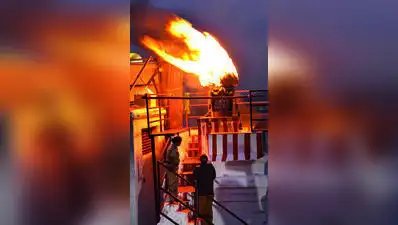
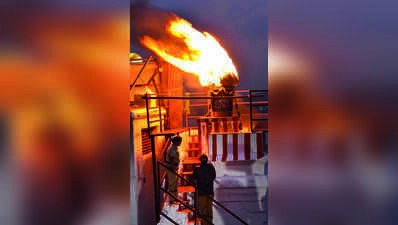
Srimathi VenkatachariOn Nov 24, Karthigai Deepam day, a small team from the Subramaniya Swamy Temple is expected to climb Thiruparankundram hill in Madurai and light a lamp on the deepathoon, a stone pillar near the Hazrat Sultan Sikandar Badusha Auliya Dargah. Three days earlier, on Nov 21, the commissioner of Tamil Nadu’s hindu religious and charitable endowments department approached Supreme Court seeking a review of its Nov 20 order.The decision to seek review is difficult to justify, legally and practically. The state may have legitimate concerns, but a closer reading of Supreme Court’s order suggests that it has little to gain from reopening the matter at this stage.On Nov 20, a bench of Justices Aravind Kumar and Vipul M Pancholi stayed paragraphs 1 to 141 of Madras high court division bench judgment dated Jan 6. That judgment had held that the pillar stood on temple land and directed that the lamp be lit there every year.Supreme Court then permitted the lamp to be lit on Nov 24, but only as a one-time arrangement and under strict conditions.The collector will supervise the exercise and decide the size of the team in consultation with the temple’s executive officer, the Archaeological Survey of India and the police commissioner. The public cannot accompany the team. Processions, congregations and slogans are prohibited. No excavation, construction or alteration is permitted. Worship at the customary sites and lawful access to the dargah must continue undisturbed. The collector must submit a compliance report, and the CRPF may be deployed if necessary.There is an important qualification. The court has made it clear that its order does not recognise any customary, religious or proprietary right. It does not declare the lighting of the lamp an essential religious practice. Nor does it confer a continuing right of entry. Questions of title, possession and access remain open. Final arguments are scheduled for the second week of Jan 2027.In other words, the court has allowed a lamp to be lit once without deciding who has the better legal claim to the place.That distinction should not be lost in the political noise surrounding the dispute.Is review the right remedy? Review jurisdiction under Article 137 of the Constitution is narrow. The principles reflected in Order XLVII Rule 1 of the Code of Civil Procedure permit review on grounds such as discovery of important new evidence, an error apparent on the face of the record or another sufficient reason of a similar nature.Supreme Court has repeatedly cautioned that review is not an appeal in disguise. In Parsion Devi vs Sumitri Devi (1997) and Kamlesh Verma vs Mayawati (2013), it made clear that a party cannot seek review simply because it disagrees with the Court’s conclusion.The state’s objections were not unheard. During the Nov 20 hearing, its counsel argued that the pillar was a survey marker and had no connection with worship, relying on earlier orders of 1996, 2014 and 2017. The dargah authorities and the devotees were also heard. After considering the rival submissions, the bench decided to permit the ceremony under carefully controlled conditions.The state’s strongest argument is perhaps that the court has permitted an event that cannot be undone once it takes place. The lighting of the lamp is irreversible in practical terms, and the immediate subject matter of the interim dispute would be exhausted for that occasion. Courts must exercise particular care when interim relief effectively becomes final for the limited period to which it relates.This concern deserves consideration. The fact that an order is labelled temporary does not mean that all its consequences are temporary.Yet the court appears to have anticipated this difficulty. It has confined the permission to one occasion and ruled out any claim that the event establishes a custom or creates a precedent. All substantive questions have been left for Jan. Although the ceremony may carry social and political significance, that is not the same as acquiring legal recognition as a continuing right.The review petition therefore faces a formidable jurisdictional hurdle. Unless the state can demonstrate an error apparent on the face of the record, its attempt to reopen the interim arrangement is unlikely to succeed.The state’s concerns about public order should not be brushed aside. Article 25 makes religious freedom subject to public order, morality and health.Last Dec, protests near the hill following the non-implementation of the single judge’s directions reportedly led to confrontations with the police and prohibitory orders under Section 163 of the Bharatiya Nagarik Suraksha Sanhita. There are also genuine concerns about the hill’s heritage, inscriptions, environment and security.A govt cannot afford to be casual about any of these matters.But public order must not become a convenient reason to deny legitimate religious observance. Equally, religious freedom cannot be used to disregard the rights of others or disturb lawful access to the dargah.Supreme Court’s safeguards appear designed to accommodate both concerns. The collector is in charge, ASI is involved, public participation is restricted and access to the dargah is protected. The responsibility now lies with the administration to ensure that these directions are followed.There is no need to turn a limited judicial accommodation into another confrontation.There is one aspect of this dispute that deserves more attention: the cost to the public.Every fresh round of litigation means more public money spent on legal representation, preparation of records, administrative coordination and security arrangements. Senior govt officials, police personnel and district administrators are drawn away from their regular responsibilities. The courts, already burdened with enormous backlogs, must devote further time to a controversy whose substantive issues are scheduled for hearing within weeks.The cost is not merely the lawyers’ fees or court-related expenditure. There is also the less visible cost of official time and administrative attention diverted from other public duties.There is nothing wrong with a govt defending its legal position. But litigation is not cost-free, and the money spent is not the govt’s money. It belongs to the taxpayer.Before filing yet another proceeding, the state ought to ask a simple question: what practical or legal purpose will it achieve?Where the SC has kept the state’s objections alive for final hearing, an immediate review risks spending public resources without any corresponding benefit. This is not an argument against legitimate litigation. It is an argument against avoidable and repetitive litigation. Public money must be spent in pursuit of a demonstrable public purpose, not merely to register institutional or political displeasure.The real questions are still waiting for answers. Is the deepathoon a lamp pillar or a survey stone? Who owns the land, particularly in light of the 1923 decree and the Privy Council’s 1931 ruling? Do the earlier orders of 1996 and 2014 operate as res judicata? Can a writ court decide disputed questions of title and custom, or should they be left to a civil court? Was the dargah given a fair opportunity of hearing during the single judge’s site inspection?These are serious questions. They deserve evidence, careful argument and a reasoned judgment, not another round of hurried litigation. The flame may last a few minutes. The judgment must endure for generations.(The writer is an advocate in Chennai)