










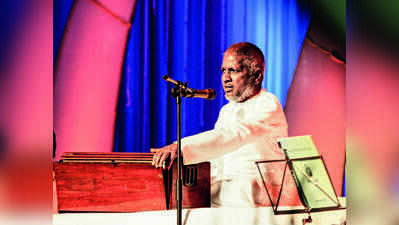
They did not queue up outside music stores for his cassettes. They did not wait for All India Radio to play his latest number, nor did they experience the frenzy surrounding an Ilaiyaraaja album release in the 1980s and 1990s. Yet, decades later, Gen Z appears to have found the maestro on its own terms.For a generation raised on streaming platforms, playlists, short-form videos and instantly accessible global music, Ilaiyaraaja is becoming a fascinating rediscovery. Old melodies, instrumental interludes and background scores are being picked up for reels, edits and personal playlists, giving compositions created decades ago a new context and audience.Today’s filmmakers grew up on his music too, and they keep returning to it. In 2024, the Malayalam survival drama ‘Manjummel Boys’ placed the Ilaiyaraaja composition ‘Kanmani anbodu’ from the 1991 film ‘Guna’ at its emotional peak. Theatres across Tamil Nadu erupted, and a song older than most of the audience climbed back up the streaming charts. The reuse of his tracks has also stirred debate, with the composer repeatedly asserting his rights and sending legal notices over unauthorised use. If anything, the headlines sent more young viewers hunting for the originals. Cut to 2026, when Karthik Subbaraj’s ‘Dorothy’ featuring three compositions by Ilaiyaraaja is making a wider appeal among all.It is an unusual phenomenon because nostalgia alone cannot explain it. Many listeners were not even born when songs such as ‘Ilaya nila’, ‘Valaiyosai’, ‘Mandram vandha thendralukku’, ‘Poove sempoove’, ‘Nilaave vaa’ or ‘Raja Raja Chozhan’ were released. They have no first-hand memories attached to these songs. What they have instead is discovery.The smartphone has replaced the transistor and cassette player, while algorithms increasingly perform the role once played by radio presenters and neighbourhood music shops. A few seconds of an old composition heard on a reel can send a listener searching for the full song. One track leads to another and, before long, a listener who arrived through a 20-second clip can find an entire musical catalogue waiting to be explored.What works particularly well for Ilaiyaraaja in this environment is the strength of his hook lines. Long before the term became integral to digital music marketing, his songs often opened or unfolded around musical phrases that lodged themselves almost instantly in the listener’s mind.But reducing his renewed appeal to catchy melodies would miss the larger picture.Gen Z is also a headphone generation. Music is consumed intimately, repeatedly and often independently of the film for which it was written. That gives younger listeners an opportunity to notice layers in Ilaiyaraaja’s compositions — the bass travelling beneath a melody, a guitar appearing unexpectedly, strings changing the emotional character of a passage or a flute entering almost like another voice.His background scores lend themselves particularly well to this rediscovery.Ilaiyaraaja’s BGM was rarely ornamental. It often entered the emotional space between dialogue and silence. Love, loneliness, anticipation, grief or hope could be communicated without a lyric being sung. Equally important was his understanding of when not to use music. That sensibility makes his work surprisingly compatible with today’s visual culture. Reels and short videos depend heavily on music to create an emotion within seconds.Director John Mahendran believes this ability comes from Ilaiyaraaja’s understanding of cinema. “He had the ability to grasp a situation, write the music almost immediately and, importantly, recognise when silence itself is the most effective score. Ilaiyaraaja’s background music does not merely accompany a filmmaker’s images; it can reveal another emotional dimension within them.”Music curator and television personality Subhasree Thanikachalam sees another reason for his connection with younger listeners — his mastery of the hook line. “It fits in with the way Gen Z consumes music today,” she says. “His background scores demonstrate how a musician can transform the experience of a film, with individual themes functioning almost as emotions without words.”Ilaiyaraaja’s ‘Valiant’, his first Western classical symphony, premiered in London in 2025 with the Royal Philharmonic Orchestra. At a stage in life when an artist could comfortably live off a monumental body of work, he was still attempting something new. That matters to a generation that may encounter him without the historical baggage surrounding the label “legend”.His instrumental works, including ‘How to Name It?’ and ‘Nothing But Wind’, have also acquired a different relevance in the streaming era. They allow a young listener to encounter Ilaiyaraaja without necessarily knowing Tamil, recognising the film or understanding the cultural context in which his career developed.Every generation has discovered a different Ilaiyaraaja. The 1980s heard the composer who dramatically altered the soundscape of Tamil cinema. The cassette generation carried his melodies into homes, buses and tea shops. Later listeners rediscovered him through CDs, television and digital archives. Gen Z has found him through headphones, playlists, reels and algorithms.And Raaja, once again, has found a new generation.