






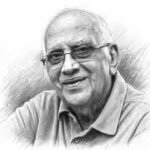

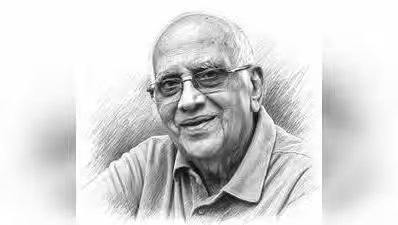
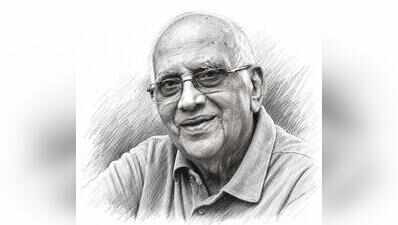
Chennai: If Kamal Haasan was forever looking for the next impossible idea to put on screen, Singeetam Srinivasa Rao was among the few directors adventurous enough to travel with him. The legendary filmmaker passed away following health complications. Rao breathed his last at Kauvery Hospital in Chennai on Saturday. He was 95.Their creative association produced some of cinema’s most unusual films — stories in which a star could play a blind violinist, perform without dialogue, shrink himself into the unforgettable Appu or multiply into four entirely different men. Singeetam rarely appeared interested in protecting the conventional image of a hero. Instead, he seemed fascinated by how far an actor, a story and the medium itself could be stretched.That spirit of curiosity defined Singeetam’s cinema. A filmmaker who crossed linguistic and genre boundaries with remarkable ease, Singeetam could move from comedy to tragedy, fantasy to science fiction and realism to technical experimentation without allowing himself to be identified with one particular formula. Tamil cinema was an important part of that journey, and Kamal became one of his most significant creative collaborators.Their association reached Tamil audiences memorably with Raja Paarvai (1981), Kamal’s 100th film. As a blind violinist, Kamal played a protagonist far removed from the swaggering commercial hero. The film approached its central character with sensitivity rather than turning his disability into a convenient device for sympathy.It was also an early indication of what the Singeetam-Kamal combination would come to represent: risk.The partnership became even more audacious with ‘Pushpaka Vimana’ — familiar to Tamil audiences as ‘Pesum Padam’ — in 1987. Imagine placing one of Indian cinema’s finest dialogue-oriented actors at the centre of a film and then taking away his words. Singeetam did precisely that.The film depended on faces, gestures, movement, sound and situations rather than spoken dialogue. Kamal’s performance had to communicate everything from desperation and romance to greed and absurdity without the assistance of a single conventional conversation. What emerged was not a gimmick but a darkly comic commentary on aspiration and human behaviour. Then came Apoorva Sagodharargal in 1989.Kamal’s Appu became a cinematic phenomenon. But behind the technical fascination surrounding the character was Singeetam’s ability to ensure that the illusion remained part of the narrative rather than becoming the entire narrative. Revenge drama, family sentiment, comedy and spectacle were packed into a mainstream entertainer whose technical ambition was extraordinary for its period.If Apoorva Sagodharargal tested physical transformation, Michael Madana Kama Rajan tested performance, timing and staging. Released in 1990, the film had Kamal playing four characters, each with his own personality and mannerisms. As identities collided and misunderstandings multiplied, the screenplay became increasingly complicated. Yet Singeetam maintained control over the madness.It remains an example of what made their partnership distinctive. Kamal brought enormous creative energy to the table, including as a writer. Singeetam did not attempt to contain that energy; he knew how to organise it cinematically. In many ways, that was the secret of their equation.