









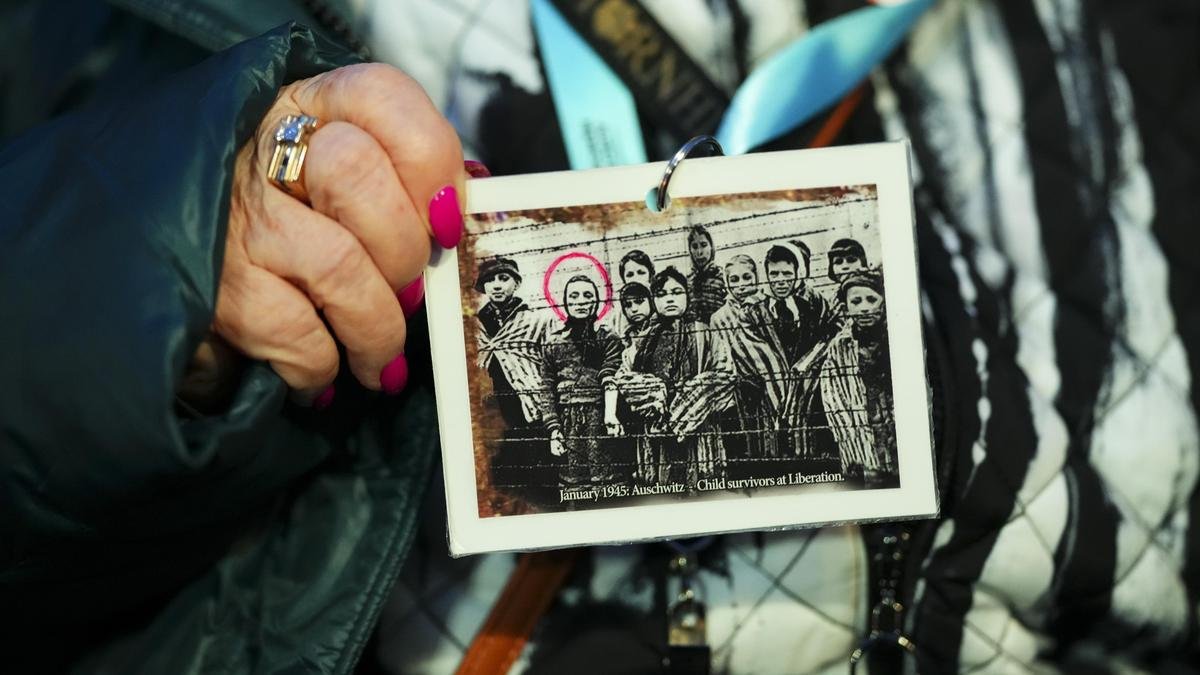
The costs of war are multidimensional. Be it the loss of life, the direct and indirect economic implications or the displacement of families, the list is endless. However, when we usually talk about the effects of war, we primarily do so from the perspective of the generation living through it, or from a historical perspective. What does war, genocide, generational trauma, etc., do to the ‘generation-after’, especially to their lived history, experiences and memory?
Defining the ‘generation-after’
Before, we look into effects of generational trauma on the ‘generation-after’ or the ‘second generation’, it is imperative to understand who they are. In this context, the generation-after refers to people who are born immediately after their previous generation has gone through a significant trauma that affected a large section of the population, such as the Holocaust, to cite an example. This group of people has not directly experienced the event, but they are the generation that immediately follows the ones who were affected by it.
Postmemory and the inheritance of trauma
In her essay titled The Long Afterlife of Loss, Eva Hoffman says, “Loss leaves a long trail in its wake. Sometimes, if the loss is large enough, the trail seeps and winds like invisible psychic ink through individual lives, decades, and generations.” She adds that the generation-after has been placed in a melancholic position due to their historical situation and it is their fate “to live with a multitude of lost ‘‘objects’’ that they never had a chance to know.”
One of the main things that this generation inherits, is a memory of loss, not based on first-hand experience, but one that still feels real.
Marianne Hirsch, an American philosopher, coined the concept of postmemory to explain the experiences of the generation-after, which they “remember” only from second-hand experiences, but which still seem to constitute their own memories as they have been transmitted to them “so deeply and effectively”.
Postmemory should not be understood as memory. It is rather the relationship that is shared by the generation-after with the powerful and often traumatic experiences that occurred prior to their birth. These memories get transmitted and are reinforced through photographs, oral narratives, videos, etc. The generation-after gets affected to the point where these memories often feel more real to them than their own lived experience.
Transactions between the past and the present
In an interview published by the Columbia University Press, Ms. Hirsch says that she wondered why her memories of her parents’ recollections or scenes of “the war” seemed more vibrant to her than moments from her own childhood. She adds that this ‘shared memory’ had the qualities and textures of memories, even though they were not her memories. Memories, Ms. Hirsch says are, “mediated by public images and stories that are transmitted to us from overpowering historical events.”
Ms. Hirsch posits that postmemory’s connection with the past is not merely a recalling, but is a mediation “by imaginative investment, projection, and creation”. She says that when one grows up in an environment characterised by such overwhelming inherited memories, it results in the displacement of one’s own stories and experiences by the dominant narratives of the previous generation that preceded their own birth.
One of the reasons behind this may be attributed to the fact that official estimates of the human cost of war may be very different from the actual costs endured. In such a context, memory serves not merely as a method of remembrance but as a political tool to ensure that untold stories of the victims of war do not go unsaid.
For instance, an official investigation report ordered by the then UN Secretary-General Ban Ki-moon, puts that up to 40,000 civilians were killed in the last month of the Sri Lankan government’s attack on the Tamil eelam, which culminated in the Mullivaikkal massacre on May 18, 2009. Colombo has continued to deny these statistics.
The May 2009 final offensive by the Sri Lankan army confined hundreds of thousands of Sri Lankan Tamils to a coastal strip, where they were subject to various human rights violations. Reports show that the army repeatedly announced ‘safe zones’ where civilians were asked to gather, then denied them adequate access to humanitarian aid, controlled exits through inhumane methods, and continuing to bombard these regions. The Sri Lankan government continues to reject these findings and is yet to put in place a credible justice system for the victims.
A strong political tool
The lack of acknowledgement by the state means that their memories form the strongest political tool that recognises the torture they were subjected to. These stories are imparted to the generation-after, not merely to remember, but to ensure that the lack of acknowledgment by the state does not erase the lived experience of their ancestors. In this regard, the Tamil diaspora continues to celebrate May 18 every year as Mullivaikkal Remembrance Day.
The recollections and stories of the generation-after of genocidal events, be it the Holocaust or the Tamil genocide in Sri Lanka, are filled with stories from their ancestors. In Ms. Hirsch’s interview, she says that the generation-after plays a significant role in ensuring that the stories witnessed by their ancestors do not get erased for a “future that will know the past deeply but that will not be paralysed by its darknesses.”
These stories of the ‘generation-after’ share immense similarities with Israel’s ongoing attack in Palestine. As citizens of the world, we should not fail to look at the toll that these traumatic events take on the memory of the generations that follow. These effects, which fail to catch the eye at the first instance, have lasting influences on the lives and lived experiences of a large number of people who are yet to be born.
Published – September 09, 2026 08:00 am IST

