








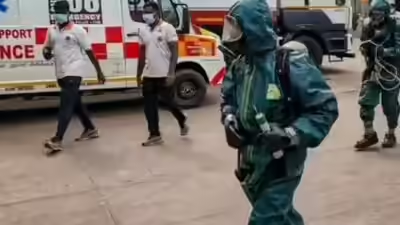
CHENNAI: At least five workers have died and 67 others remain hospitalised following an ammonia leak at a seafood processing unit in Tamil Nadu’s Tiruvallur district. The incident has put the spotlight on a chemical that quietly powers India’s seafood export industry — and the devastating consequences when it escapes containment.The gas that keeps seafood safeOn June 21, ammonia gas leaked from an industrial refrigeration system at a private seafood export facility near Chennai. Such systems are standard in fish and shrimp processing plants, where ammonia is valued for being inexpensive, efficient and effective at maintaining low temperatures.However, the same gas that preserves seafood can become deadly when released in high concentrations.Stored under pressure as a liquefied gas, ammonia rapidly turns into vapour when a pipe, valve or refrigeration component fails. Within minutes, it can spread through enclosed workspaces, exposing workers before they have time to react.What ammonia does to the bodyThe damage begins almost immediately. When inhaled, ammonia reacts with moisture in the eyes, nose, throat and lungs to form ammonium hydroxide, a highly corrosive alkaline compound that burns living tissue on contact.Victims often experience burning eyes, coughing, breathlessness and chest discomfort within seconds. As exposure increases, swelling of the airways can restrict breathing, while fluid begins to accumulate in the lungs — a potentially fatal condition known as pulmonary oedema.The danger does not always end when exposure stops. Pulmonary oedema can develop several hours later, which is why health authorities have directed hospitals treating survivors to watch for delayed respiratory complications.Many of the affected workers in Tiruvallur reported breathing difficulties, eye irritation and severe coughing. Several remain on ventilator support and oxygen therapy.The US National Institute for Occupational Safety and Health (NIOSH) classifies ammonia concentrations of 300 parts per million as immediately dangerous to life or health. In confined industrial spaces, such levels can be reached within minutes during a major leak.Could the gas have spread beyond the factory?Unlike many heavier industrial gases, ammonia is lighter than air and tends to rise. However, wind can carry the vapour beyond factory boundaries, particularly during the initial stages of a leak.Emergency responders often deploy water fog systems because ammonia dissolves readily in water, helping reduce airborne concentrations and limit its spread.Authorities have initiated environmental monitoring around the facility to assess any remaining risk to nearby communities.Public health agencies, including the US Centers for Disease Control and Prevention (CDC), note that people who have left the contaminated area generally do not pose a secondary contamination risk to others. This means family members, healthcare workers and bystanders who assisted victims are unlikely to face danger from indirect exposure.A familiar industrial riskIndustrial safety guidelines require ammonia refrigeration facilities to maintain gas detection sensors, emergency ventilation systems, sealed machinery rooms and evacuation protocols.Following the Tiruvallur incident, Tamil Nadu authorities have ordered reviews of industrial safety measures and occupational health standards at similar facilities across the district.What should nearby residents do?Although ammonia disperses relatively quickly in open air, health experts advise residents living near the affected area to remain vigilant over the next 24 to 48 hours.Watch for delayed symptomsSeek medical attention immediately if you develop:Persistent coughing or wheezingShortness of breathBurning, watering or irritated eyesBlurred visionChest tightness or painHeadache, dizziness or nauseaInform healthcare providers that you were in the vicinity of the leak.There is no specific antidote for ammonia poisoning. Treatment focuses on supporting breathing and managing symptoms.Ventilate your homeResidents are advised to:Open windows and doors to improve air circulationUse fans to push indoor air outsideAvoid consuming water stored in uncovered containers until local authorities confirm it is safeThoroughly wash fruits, vegetables and exposed food items before consumptionIf you were directly exposedPublic health experts recommend:Removing clothing worn during exposure and sealing it in double bagsShowering thoroughly with lukewarm water and mild soapFlushing irritated eyes with clean water for 10 to 15 minutesAvoiding eye drops or home remedies unless prescribed by a doctorVulnerable groups should be extra cautiousChildren, older adults, and people with asthma, bronchitis or heart disease are more susceptible to respiratory complications. Even mild symptoms in these groups should prompt medical evaluation.Follow official advisoriesTamil Nadu health authorities say the situation remains under active surveillance. Residents should rely on official updates, avoid the affected premises and follow instructions issued by local authorities and public health officials.